

Can I Sell My Used CPU? Yes, you can sell your used CPU in 2026 if the processor is still working properly. Many people buy second-hand CPUs for budget gaming PCs, office computers, and older system upgrades.
After upgrading PCs over the years, I noticed that many users leave old processors unused because they think they have no value anymore. In reality, popular Intel and Ryzen CPUs still sell regularly on online marketplaces, especially when they are clean, tested, and priced fairly.
Selling an old CPU is one of the easiest ways to recover part of your PC upgrade cost, especially if the processor is still working and compatible with older systems.
Before selling, it’s important to check if your processor is still in good condition. You can verify it using this guide: How to Check CPU Health?
Why Sell Your Used CPU?
There are several reasons why selling an old CPU still makes sense in 2026.
- Turn Unused Hardware into Value: Selling your used CPU quickly and easily makes some extra cash. Depending on its model and condition, you could earn a significant amount.
- Help Others: Many people seek affordable components to repair or upgrade their systems. By selling your used CPU, you are helping others save money on their tech needs.
- Environmental Benefits: Reusing computer parts is an excellent way to reduce e-waste. Instead of throwing it away, you are giving your CPU a second life.
CPU performance and compatibility often depend on the system it runs in. If you want to understand that better, read: What is a Motherboard in a Computer?
Common Mistakes That Lower CPU Resale Value
Many sellers reduce the value of their processor without realizing it. Small mistakes can make buyers avoid the listing or offer much lower prices.
Here are some common problems:
- Leaving old thermal paste on the CPU
- Uploading blurry photos
- Hiding bent pins or damage
- Using poor packaging during shipping
- Setting unrealistic prices
- Not showing proof that the CPU works
Many CPU issues are actually related to system errors or fan behavior. This guide explains it: How to Fix CPU Fan Speed Detection Errors?
Buyers usually trust listings that include clean photos, honest details, and proper testing information.
How to Determine the Value of Your Used CPU?
Before listing the CPU you used for sale, it is important to understand its value. Age, condition, and performance can all impact how much you can sell it for. Here is how to determine its worth:
- Model and Specifications: The first thing you need to know is your CPU’s model number and specifications. Is it an Intel, AMD, or another brand? Check the exact model and its clock speed, number of cores, and generation. Newer models tend to have higher resale value.
- Condition: Is your CPU in good working condition? If it has physical damage or does not work, its value will decrease significantly. However, if it is gently used and still runs well, you can expect a better price.
- Market Demand: Research the current market demand for your CPU. Check online marketplaces and tech forums to see how much similar CPUs are being sold for. Most buyers compare listings on platforms like eBay and Facebook Marketplace before deciding a fair price.
- Original Packaging and Accessories: If you still have the original packaging, manuals, or other accessories, this can increase the value of your CPU. Collectors or buyers looking for a like-new product will pay more for it.
How Much Can You Sell a Used CPU for in 2026?
| CPU Category | Estimated Used Price (2026) | Examples |
|---|---|---|
| Entry-Level CPUs | $25 – $50 | Older Intel i3, Ryzen 3 |
| Mid-Range Gaming CPUs | $60 – $120 | Intel i5, Ryzen 5 |
| High-End CPUs | $130+ | Intel i7, Ryzen 7, newer models |
Used CPU prices usually depend on the processor generation, condition, demand, and overall performance. If you are unsure whether selling or upgrading is better, this guide will help: Should I Upgrade my CPU?
In real-world used markets, CPUs like Ryzen 5 3600 and Intel i5 10th gen still sell quickly because many users upgrade older gaming PCs instead of building new systems.
Popular gaming CPUs often keep their value longer because many users upgrade older systems instead of building completely new PCs.
For example, older Ryzen 5 processors often sell quickly because many budget gamers still use AM4 motherboards and want affordable upgrades.
Can I Sell My Used CPU Online Safely?
Yes, you can sell your used CPU online safely as long as you use reputable platforms, provide accurate descriptions, and choose secure payment methods. Online marketplaces offer buyer and seller protection, making them one of the safest ways to sell used computer components.
Best Places to Sell Your Used CPU:
Now that you have determined your CPU’s value, it is time to figure out where to sell it. Here are some popular options:
- Online Marketplaces (eBay, Amazon): Websites like eBay and Amazon are excellent places to sell used computer parts. You can list your CPU for auction or at a fixed price. These platforms have a large audience, which means more potential buyers.
- Tech Forums and Communities: If you want buyers specifically interested in computer hardware, consider tech forums and communities like Reddit’s Hardwareswap or specialized online marketplaces for computer parts. These platforms are great for finding tech enthusiasts who are looking for deals.
- Local Classifieds (Craigslist, Facebook Marketplace): Selling locally is a good option to avoid shipping costs and fees. Craigslist and Facebook Marketplace allow you to connect with buyers in your area.
- Recycling Programs: If you want to eliminate your used CPU, some manufacturers or e-waste recycling programs offer buyback options or free recycling. While this may not yield as much money, it is an eco-friendly solution.
How to Prepare Your Used CPU for Sale
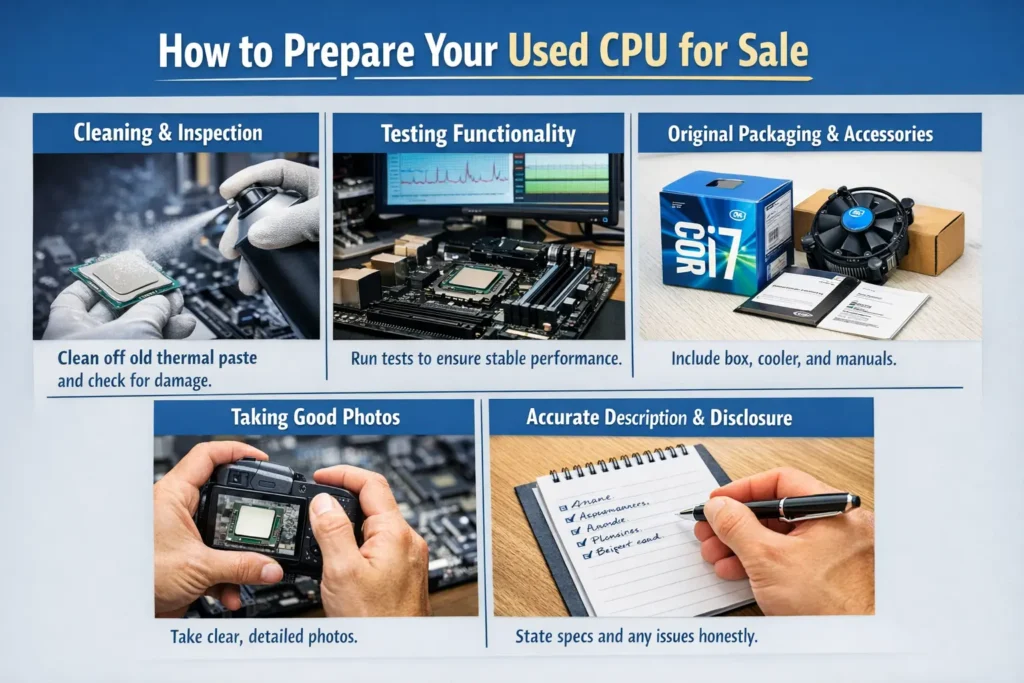
Before listing your CPU, take the time to properly clean, inspect, and document it. A well-prepared item builds buyer trust and helps you get the best possible value.
- Cleaning & Inspection:
Gently remove dust using compressed air.
Clean off old thermal paste with isopropyl alcohol and a soft, lint-free cloth. If you want to clean thermal paste safely, check this guide: Can I Use 70 Alcohol To Clean CPU
Inspect the CPU for physical damage such as bent pins or worn contacts. - Testing Functionality:
If available, install the CPU in a working motherboard.
Run a basic system check or stress test to ensure stable performance. You can also check CPU condition here: How to Check CPU Health
Watch for overheating, system crashes, or error messages. - Original Packaging & Accessories:
If you have the original box, stock cooler, manuals, or any other accessories, include them in the sale.
These extras increase value and appeal to buyers. - Taking Good Photos:
Use clear lighting and take multiple angles of the CPU.
Include close-ups of the model number or any visible markings.
If accessories or packaging are included, photograph those as well. - Accurate Description & Disclosure:
Clearly state the model, age, usage history, and if it’s been overclocked.
Mention any wear, cosmetic flaws, or performance concerns honestly.
Transparency builds trust and helps avoid buyer issues.
Steps to Sell Your Used CPU:
Once your CPU is cleaned, tested, and documented (see the section above), it’s time to list it for sale. Here’s a quick summary of the selling process:
- Choose a Platform: eBay, Facebook Marketplace, Reddit, or tech forums are good options.Local buyers often prefer Facebook Marketplace because they can test the processor before purchasing and avoid shipping costs.
- Set a Fair Price: Research current listings for similar models.
- Upload High-Quality Photos: Use the ones you took during the preparation step.
- Write a Clear Listing: Use your description from earlier, including full specs and condition.
- Secure Payment & Shipping: Choose a safe payment method (PayPal, etc.) and package the CPU carefully for delivery.
How To Ship a Used CPU Safely
Proper packaging is important when selling a processor online. CPUs can get damaged during shipping if they are packed loosely.
To protect the processor:
- Place the CPU inside an anti-static bag
- Use the original plastic CPU holder if available
- Wrap the package with bubble wrap
- Use a strong cardboard box
- Avoid placing pressure directly on CPU pins
If the processor arrives damaged, buyers may request refunds or leave negative feedback. Safe packaging helps avoid these problems.
What Buyers Usually Look For
From watching hardware marketplaces over the years, most buyers focus on three things before purchasing a used CPU:
- Physical condition
- Proof that the processor works
- Fair pricing
Listings with clear photos and honest descriptions usually perform better than listings that only repeat technical specifications.
Many buyers also prefer sellers who respond quickly and explain how the CPU was previously used.
Tips for a Smooth Transaction:
- Be Honest: Always be upfront about the condition of the CPU. Misleading buyers can result in negative feedback or even returns.
- Communicate Promptly: Many buyers ask for benchmark screenshots or proof that the processor boots correctly. Responding quickly can improve buyer trust and help the item sell faster.
- Avoid Scams: Watch out for suspicious buyers, especially those asking for unusual payment methods or shipping requests. Stick to reputable platforms and payment methods to avoid scams.
Always review platform protection policies, buyer ratings, and payment safeguards before completing a transaction. This helps reduce the risk of scams and disputes.
Are Old CPUs Still Worth Buying in 2026?
Many older CPUs are still useful for gaming, office work, media PCs, and school computers. Buyers often look for affordable processors that match older motherboards instead of replacing the entire system.
Because of this, working Intel and Ryzen CPUs can still have decent resale demand, especially mid-range gaming models from recent generations.
Based on real marketplace trends, used CPUs from the last 5 – 7 years still have strong resale demand, especially for budget gaming builds and office PCs.
FAQs:
Can I sell my used CPU?
Yes, you can sell your used CPU if it is in working condition. Many people look for affordable CPUs for upgrades, repairs, or budget PC builds, making resale a good option.
Is selling a used CPU worth it?
Yes, selling a used CPU is worth it if the processor is functional and still in demand. You can recover part of your upgrade cost while helping others save money.
Can I sell my used CPU online safely?
Yes, you can sell your used CPU online safely as long as you use reputable platforms, provide accurate descriptions, and choose secure payment methods. Online marketplaces offer buyer and seller protection, making them one of the safest ways to sell used computer components.
Where can I sell my CPU and GPU?
You can sell your CPU and GPU on platforms like online marketplaces, local classifieds, or specialized tech communities. Always describe the condition accurately to avoid issues.
How much can I sell a used CPU for in 2026?
In 2026, used CPU prices vary based on brand, generation, and condition. Entry-level CPUs may sell for $25 – 50, mid-range models for $60 – 120, and high-end CPUs for $130 or more.
Do I need to do anything before selling the CPU?
Before selling your CPU, clean it properly, test it for full functionality, and check for physical damage. CPUs do not store personal data, so no data wiping is required.
Can a damaged CPU be sold?
Yes, a damaged CPU can be sold for parts, but its resale value will be much lower. Always clearly disclose any defects to avoid buyer disputes.
Conclusion: Can I Sell My Used CPU?
Selling a used CPU in 2026 is still worth considering if the processor works properly and remains compatible with modern or budget systems. Many buyers continue searching for affordable computer parts for gaming, office work, or repair projects.
A clean processor, honest description, fair pricing, and safe packaging can make a big difference in how quickly the item sells. Instead of leaving unused hardware stored away, selling it can help recover part of your upgrade budget while giving the processor a second life.