
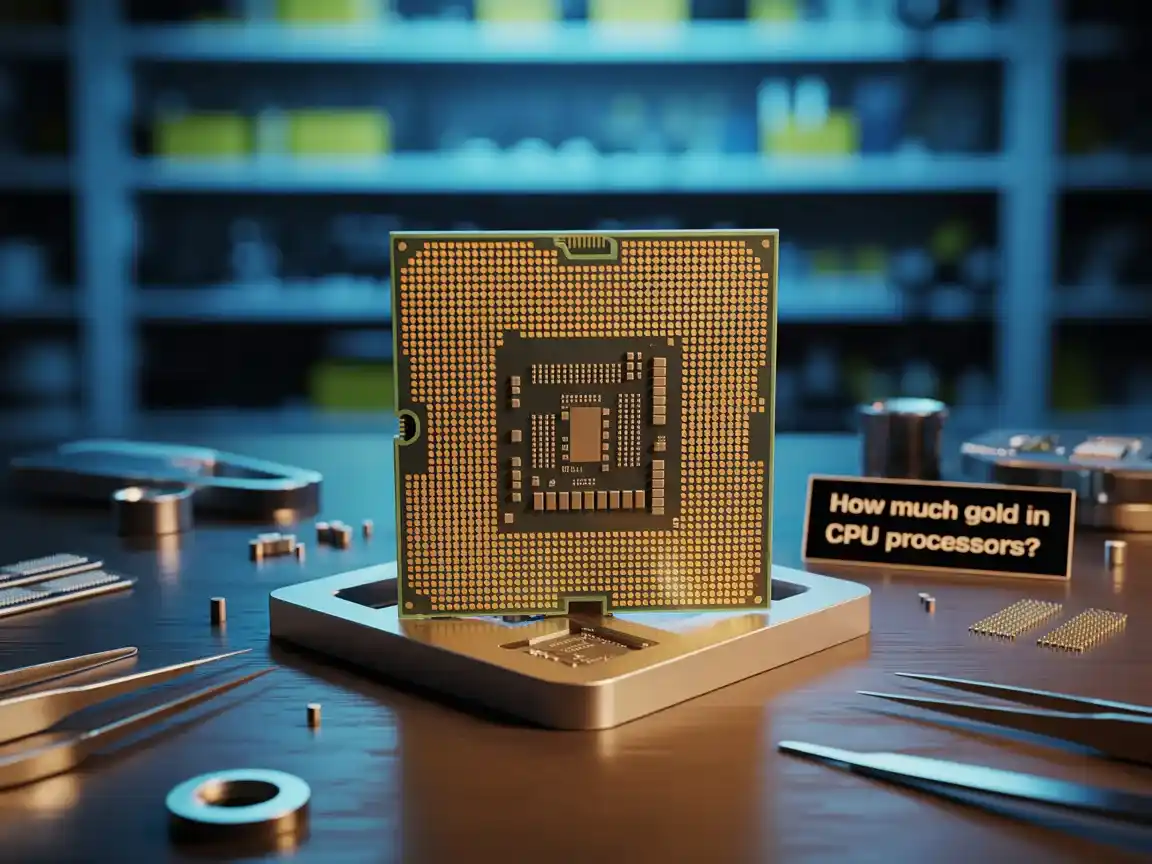
Wondering how much gold in CPU processors? Most CPU processors have a small amount of gold, about 0.1 to 0.3 grams per chip. This gold is used in the connectors and pins because it does not rust. Old processors usually have more gold than new ones.
This guide will explain exactly how much gold can be found and which processors are best for gold recovery.
Purpose of Gold in Electronics:
Gold is used in electronics for its excellent electrical conductivity, resistance to damage, and workability. These properties ensure reliable, long-lasting connections in components like connectors, switches, and circuit boards, making gold essential for high-performance electronic devices.
Gold vs Other Metals in CPUs:
Why is gold chosen for CPUs? Gold efficiently conducts electricity and resists corrosion, ensuring reliable performance over time. Although silver and copper conduct electricity better, they oxidise and lose efficiency over time. Gold-plated connectors provide dependable, long-lasting connections crucial to CPU performance and longevity.
How Much Gold Is in a CPU?
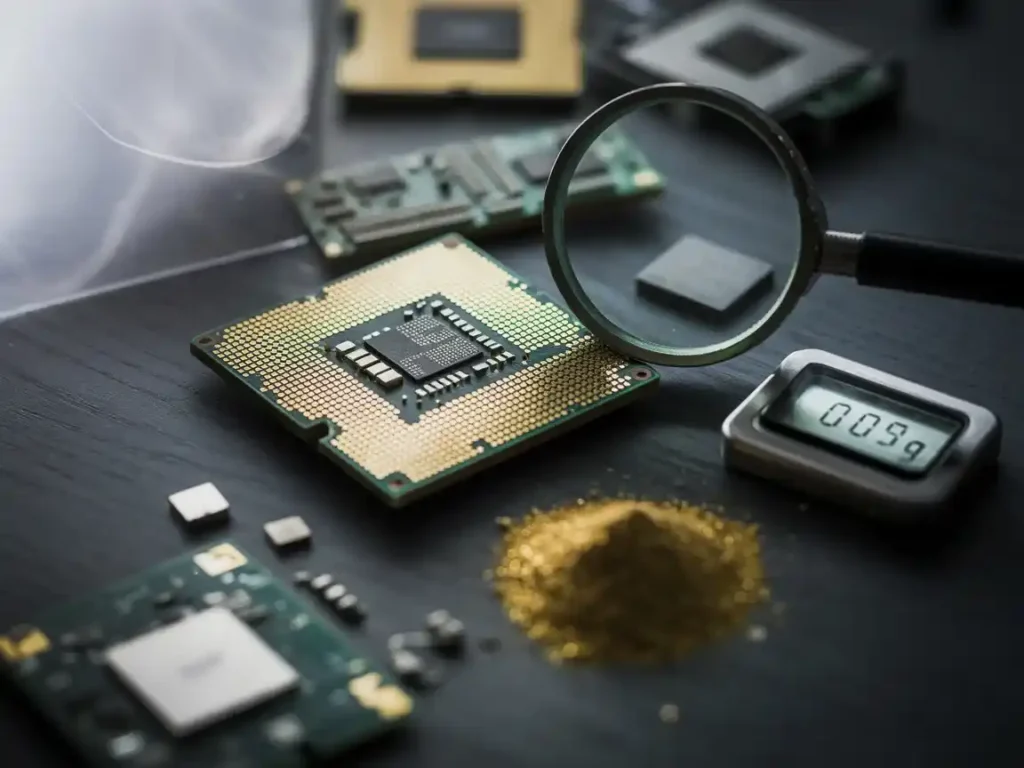
There is a difference in gold in the different CPUs.
- Average Gold Content in Modern CPUs:
Modern CPUs typically contain around 0.03 to 0.1 grams of gold, mostly in bonding wires and small plated connectors. - Gold Quantity in Old Ceramic CPUs:
- Gold in Desktop vs Laptop CPUs:
Desktop CPUs usually have more gold than laptop CPUs because they are bigger and built for higher performance. Laptop CPUs are smaller, so they use less gold. On average, desktops hold 0.2 to 0.5g, while laptops have around 0.1 to 0.3g.
Which CPUs Have the Most Gold?
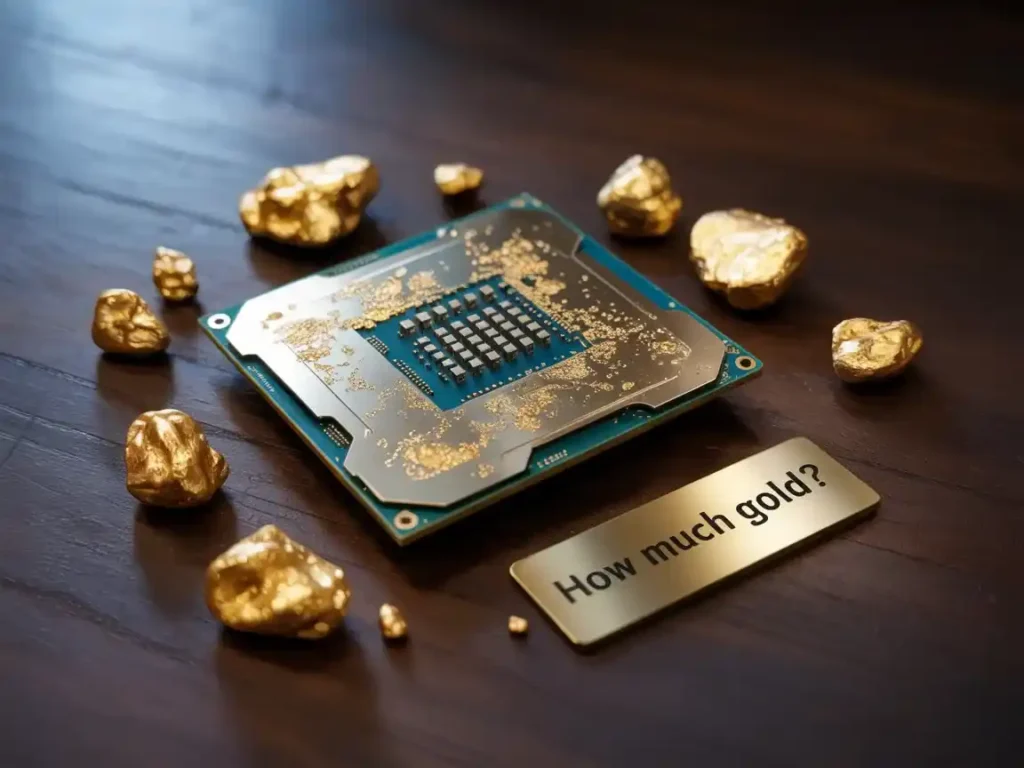
While modern CPUs use less gold, older models, especially from the 1980s and 1990s, contain more due to their design and manufacturing processes. Models like the Intel Pentium Pro, 386, 486, and early AMD processors feature gold-plated pins and caps, along with solid gold wire bonding.
These components can yield up to 0.2 grams of gold per unit. In contrast, modern CPUs, such as Intel Core i7 and i9, have significantly reduced gold content due to cost-cutting measures and the shift to organic substrates. For instance, Intel’s Pentium 4 processors have gold-plated pins with a thickness of only 0.76 microns, resulting in minimal gold yield.
In summary, vintage CPUs, especially those with ceramic packaging and gold-plated components, are the most valuable for gold recovery. Modern processors have less gold, making them less profitable for recycling purposes.
Bonding wires: Connecting internal components.
Pins and leads: Facilitating communication with other parts.
Capacitors and resistors: Ensuring stable performance.
Check the data here in the table form!
| CPU Model | Gold Content | Era | Notes |
| Intel Pentium Pro | Up to 0.5g | Mid-1990s | Features gold-plated pins and a gold heat spreader cap. |
| Intel Pentium (Heavy) | 0.5g | 1990s | Notable for its substantial gold content. |
| Cyrix 6×86 | 0.83g | Late 1990s | Contains a significant amount of gold. |
| AMD K5 | 0.5g | Mid-1990s | Older AMD model with notable gold content. |
| IBM 5x86C | 0.1g | 1990s | Contains gold-plated pins. |
| Intel 486 DX2-80 | 0.1g | Early 1990s | Features gold-plated pins. |
To identify CPUs with higher gold content:
Look for older models: CPUs from the 1980s and 1990s typically have more gold.
Check for gold-plated pins: Visible gold plating often indicates higher gold content.
Research specific models: Some models are known for their gold content; refer to the table above.
Focusing on older models like the Intel Pentium Pro or the Cyrix 6×86 can be rewarding if you want CPUs with the most gold. However, please always ensure that you follow safe handling and recycling practices when dealing with electronic waste.
Is It Worth Scrapping CPUs for Gold?
Scrapping CPUs for gold is worth it only if you process older ceramic CPUs in bulk, use safe methods, and know the value. Modern CPUs have low gold, so small-scale recovery is usually not profitable.
Recovering gold from CPUs is profitable only when processing older ceramic CPUs in bulk, using safe methods, and understanding their value. Modern CPUs contain minimal gold, making small-scale recovery generally unprofitable.
Where can Gold be Sold from CPUs or Scrap CPUs?
Detailed Guide:
If you’re looking to sell gold extracted from CPUs or scrap electronics in the USA, consider the following reputable refiners:
Phoenix Refining:
- Specializes in purchasing and refining electronic gold, including gold pins, connectors, and other gold-plated components.
- Offers competitive prices and profitable solutions tailored to your needs.
- Accepts various forms of electronic gold scrap.
Specialty Metals:
- Provides refining services for computer scrap, including motherboards, circuit boards, and CPU chips.
- Offers payment upon completion of processing, usually within 25 to 35 business days.
- Accepts a variety of electronic scrap materials for recycling.
B.W. Recycling:
- Buys gold-plated parts from electronic devices, including CPUs, IC chips, and connectors.
- Operates as a precious metals refinery, allowing them to pay higher prices for gold scrap.
- Accepts various forms of gold-plated materials for recycling.
Before selling, ensure that your materials are properly prepared and meet the specific requirements of the refiner. Contact the refiners directly to obtain quotes and understand their processes.
Trusted Gold Recovery Services:
Detailed Guide
If you’re seeking reputable gold recovery services in the USA, consider the following companies known for their trustworthiness and expertise:
- Arch Enterprises
Expert in gold refining services tailored for jewelers, dental professionals, and manufacturers. They offer personalized service and comply with environmental regulations. Payment is based on the actual gold extracted. - Phoenix Refining
Buys gold-plated items, dental gold, jewelry, and more. Utilizes advanced refining techniques for maximum gold extraction and offers competitive payouts. - Sipi Precious Metals
Provides precise recovery services with ISO/IEC 17025:2005 certification. Offers quick settlements and full documentation for environmentally responsible processing. - Precious Metals Reclaiming Service
Family-owned since 1945, they buy gold-plated scrap, jewelry, and industrial metals. Known for offering higher rates than local competitors. - Garfield Refining
Boasting more than 30 years of expertise, they deliver prompt and dependable services to jewelers, pawnbrokers, and dental professionals. They offer multiple payment methods and maintain an A+ rating with the Better Business Bureau (BBB). - Precious Plate
Specializes in gold reclaiming from electroplated materials. Offers fast settlements and environmentally responsible processing.
When choosing a gold recovery service, consider factors like transparency, payment terms, and customer reviews to ensure a trustworthy partnership.
Scrap Yards and Online Buyers:
If you are looking to sell gold-bearing CPUs or scrap electronics in the USA, several reputable scrap yards and online buyers offer competitive pricing and convenient services. Here’s a concise guide:
| Provider Name | Location | Services Offered | Payment Methods | Notes |
|---|---|---|---|---|
| Rockaway Recycling | Rockaway, NJ | Free shipping, daily quotes, fast payment | PayPal, Check | Offers up to $130/lb for high-grade ceramic CPUs |
| B.W. Recycling | Nationwide (Online) | In-house gold refining, buys various CPU types | Not specified | Specializes in older CPUs like Pentium Pro and 386 series |
| Specialty Metals Smelters | Nationwide (Online) | Refines CPUs, motherboards, and IC chips | Check, Wire Transfer | Processing time: 25–35 business days; accepts large quantities |
| Ceramic CPU Scrap | Nationwide (Online) | Sells high-yielding CPU scrap for gold recovery | Not specified | Offers bulk lots of vintage CPUs for resale |
| eBay (Scrap Listings) | Nationwide (Online) | Marketplace for buying and selling CPU scrap | Varies by seller | Suitable for individuals looking to sell smaller quantities |
💡 Tips for Selling CPU Scrap
- Identify CPU Type: Ceramic CPUs typically contain more gold than plastic or fiber types.
- Check Weight: Some buyers require a minimum weight for free shipping or higher payouts.
- Clean Components: Take off all non-metal pieces, such as plastic or rubber, to raise the material’s worth and ensure cleaner scrap.
- Request Quotes: Always get a quote before shipping to ensure fair pricing.
For the best rates and services, consider reaching out to these providers directly to discuss your specific needs and quantities.
Things to Avoid When Selling:
When selling gold, whether from CPUs, jewelry, or scrap, avoiding common mistakes ensures you receive fair value and protects you from scams. Here’s a concise guide:
🚫 Top Mistakes to Avoid When Selling Gold:
| Mistake | Why It Matters | How to Avoid It |
|---|---|---|
| Selling to the First Buyer | You might get less than market value. | Get multiple quotes from different buyers. |
| Not Researching Gold Prices | You could accept a low offer. | Check current gold prices before selling. |
| Ignoring Gold Purity | Different purities affect value. | Know the karat of your gold and its melt value. |
| Not Verifying Buyer Credentials | Risk of fraud or unfair deals. | Ensure the buyer is licensed and reputable. |
| Overlooking Hidden Fees | Fees can reduce your earnings. | Ask about all fees upfront. |
| Rushing the Sale | You might make a hasty decision. | Take your time to evaluate offers. |
| Not Keeping Records | Important for disputes or proof. | Keep receipts, photos, and correspondence. |
By avoiding these mistakes, you can ensure a fair and profitable sale of your gold items. Click here and learn online gold recovery process from CPUs.
FAQs:
Can gold be reused from CPUs for new electronics?
Yes, gold recovered from CPUs can be refined and reused in various industries, including electronics manufacturing, dentistry, and jewelry. However, the process must meet purity standards before the recycled gold is suitable for high-performance applications.
Are there legal restrictions on extracting gold from e-waste?
Yes, some countries or states have regulations on handling and processing e-waste due to its hazardous materials. Always check local environmental laws and ensure proper licensing if you plan to extract gold commercially.
Can non-ceramic CPUs still be worth recovering gold from?
While ceramic CPUs have higher gold content, some plastic or fiber CPUs (especially early models with gold-plated connectors) can still be marginally profitable when processed in bulk. Identifying these types requires experience and testing.
Final Thoughts: How Much Gold in CPU Processors?
Gold in CPUs holds real value, especially in older models. You can turn scrap into profit by identifying high-yield chips, using safe extraction methods, and selling smartly. Stay informed, avoid scams, and work only with trusted gold recovery services.
Visit the Techy Dialogue to read further informative content. thanks